
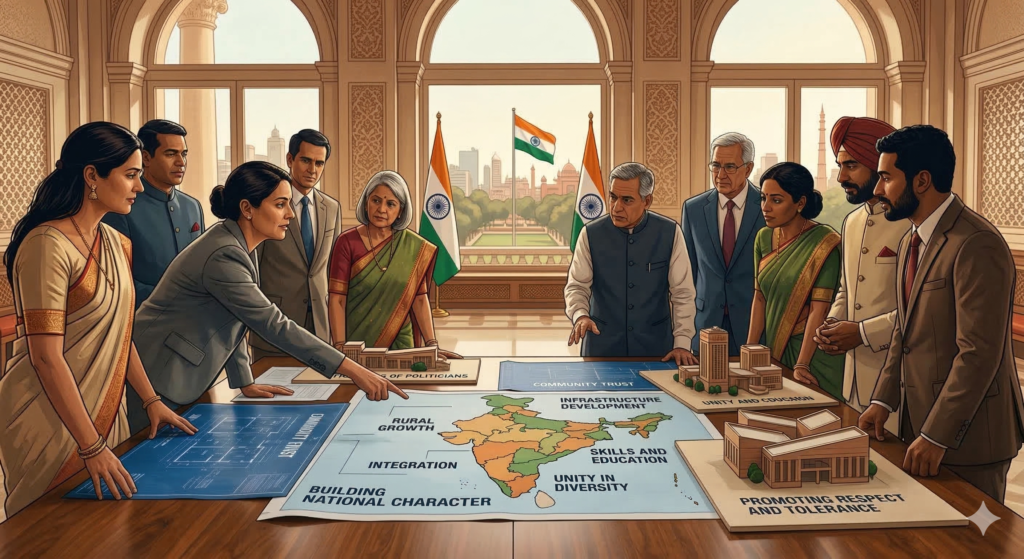
The role of politicians in building national character is both foundational and functional. In a democratic framework, political leaders do not just manage resources; they serve as the “moral architects” of the state. Their influence trickles down from policy to the personal values of the citizenry.
Here is an analysis of the specific roles politicians play in shaping a nation’s character:
- Ethical Stewardship and Role Modeling
The most immediate impact a politician has is through their personal conduct. Because they are in the public eye, their behavior sets the “moral ceiling” for the country.
- Integrity: When leaders prioritize honesty and transparency, it fosters a culture of trust. Conversely, corruption at the top often normalizes unethical behavior in everyday life.
- The Power of Example: A politician’s dedication to public service over self-interest encourages a spirit of volunteerism and civic duty among the youth.
- Policy-Led Value Systems
National character is often a reflection of the laws and systems a government prioritizes.
- Education Reform: Politicians decide the curriculum. By integrating ethics, civic sense and national history into the education system, they directly shape the mindset of future generations.
- Justice and Equality: Policies that promote meritocracy and social justice instill the value of fairness in the national psyche. If the law is applied equally to everyone, the citizens learn to respect the rule of law.
- Fostering National Unity (Social Cohesion)
In diverse nations, the politician’s role as a “unifier” is critical to national character.
- Inclusion: Politicians have the power to either bridge or widen social divides. Leaders who emphasize shared national identity over sectarian or tribal interests build a character of tolerance and harmony.
- Language and Rhetoric: The tone of political discourse dictates how citizens interact with one another. Respectful debate in parliament encourages a culture of civilized disagreement in society.
- Economic Discipline and Self-Reliance
A nation’s character is also defined by its work ethic and economic resilience.
- Dignity of Labor: By creating policies that reward hard work and innovation rather than patronage, politicians foster a culture of industriousness.
- Visionary Leadership: Setting long-term national goals (such as environmental sustainability or technological independence) gives the citizenry a sense of collective purpose.
Summary Table: Impact Areas
Role | Mechanism | Outcome for National Character |
Legislator | Crafting fair and ethical laws | Respect for the Rule of Law |
Communicator | Speeches and public discourse | Social Harmony and Tolerance |
Administrator | Transparent governance | Trust in Institutions and Honesty |
Visionary | Setting long-term national goals | Collective Ambition and Work Ethic |
Moving Forward
National character building is a collaborative process. While politicians provide the framework and the example, the “building” is done by the citizens through their daily actions.