
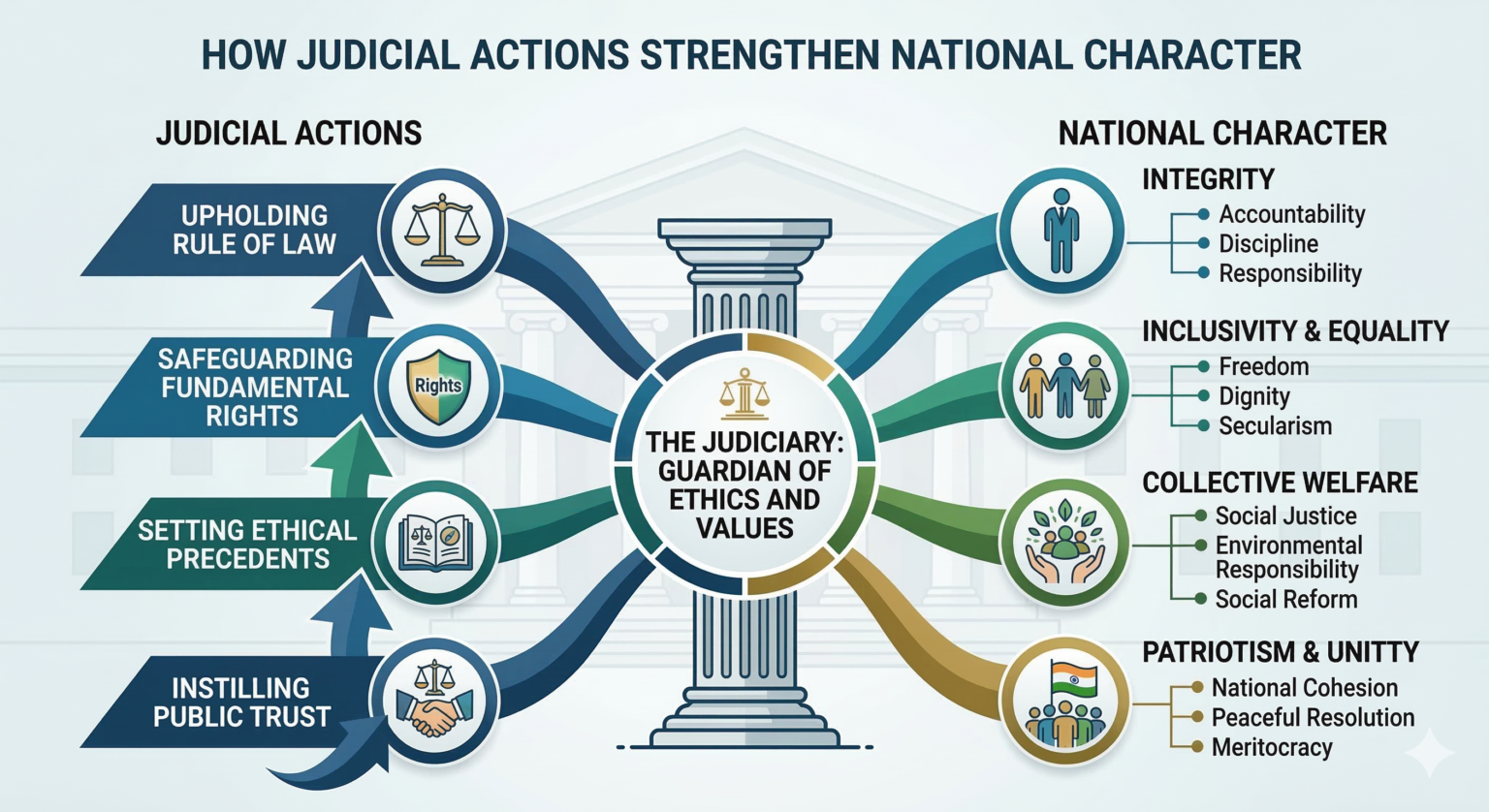
The judiciary serves as the moral and legal compass of a nation. While the legislature drafts laws and the executive implement them, the judiciary ensures that these actions align with the foundational values of the country. In the context of building national character, its role extends beyond mere dispute resolution to acting as a guardian of ethics, discipline and social justice.
Here is an analysis of how the judiciary influences and strengthens national character:
- Upholding the Rule of Law
National character is rooted in the belief that everyone—regardless of status—is subject to the same laws.
- Accountability: By holding powerful entities accountable, the judiciary reinforces the value of integrity and discourages corruption.
- Predictability: A consistent legal system creates a disciplined society where citizens understand the consequences of their actions, fostering a culture of responsibility.
- Safeguarding Fundamental Rights
The judiciary protects the inherent dignity of the individual, which is the building block of a healthy national identity.
- Inclusion and Equality: By striking down discriminatory practices, courts promote a character of inclusivity and secularism.
- Freedom of Expression: Protecting the right to dissent encourages a society that values critical thinking and intellectual honesty.
- Setting Ethical Precedents
Judicial pronouncements often act as “moral lessons” for the public.
- Public Interest Litigation (PIL): These allow the judiciary to step in on issues like environmental protection or child labor, teaching the citizenry to prioritize collective welfare over individual greed.
- Social Reform: Landmark judgments (e.g., regarding gender equality or workplace safety) shift the societal “norm,” gradually evolving the national character toward higher ethical standards.
- Instilling Public Trust
A nation’s character is reflected in the trust its citizens have in their institutions.
- Impartiality: When people believe the “scales of justice” are balanced, it fosters a sense of patriotism and belonging.
- Justice as a Deterrent: Efficient justice systems discourage “shortcut” mentalities (like bribery or law-breaking), encouraging a character of hard work and meritocracy.
Summary of Judicial Impact on Character
Pillar | Value Instilled | Judicial Action |
Integrity | Honesty & Ethics | Anti-corruption rulings and transparency mandates. |
Discipline | Respect for Rules | Strict enforcement of constitutional duties. |
Compassion | Social Empathy | Protection of marginalized groups and human rights. |
Unity | National Cohesion | Resolving interstate or communal conflicts peacefully. |
“Justice is the firm and continuous desire to render to everyone that which is his due.” — Justinian I