
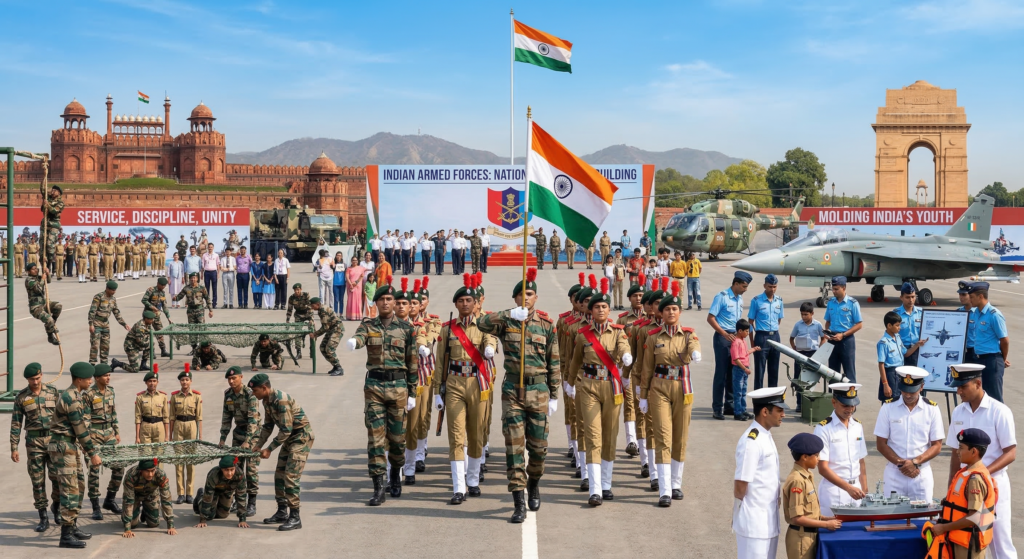
The armed forces of a nation are often viewed as the ultimate custodians of its sovereignty. However, their influence extends far beyond the battlefield; they serve as a powerful engine for National Character Building. By transforming diverse individuals into a cohesive unit governed by a strict code of ethics, the military provides a blueprint for the values a nation aspires to uphold.
The three services of the armed forces—the Army, Navy and Air Force—together play a crucial role in shaping a country’s national character, going beyond their primary duty of national defense. By instilling core values and promoting national unity, they contribute to the development of a disciplined and responsible citizenry.
Core Values as a Foundation
The armed forces operate on a foundation of values that, when adopted by the broader society, can strengthen national character.
- Discipline and Resilience: The military instills a deep sense of discipline, both external (obedience to orders) and internal (self-regulation). This discipline, combined with rigorous training that builds resilience in the face of adversity, translates into a civilian character of perseverance and determination.
- Integrity and Honor: The emphasis on truthfulness, ethical conduct and “honor codes” within the military fosters a culture of trust and integrity. When these values extend into the civilian sphere, they promote ethical behavior and a sense of responsibility.
- Sacrifice and Patriotism: The ultimate sacrifice of service members profoundly impacts the national psyche, strengthening the emotional bond with the motherland and encouraging a spirit of selfless service. This patriotism encourages citizens to prioritize the common good.
Promoting Unity and Integration
In diverse nations, the armed forces often serve as a vital institution for promoting national integration and social cohesion.
- Diverse Workforce, Singular Mission: The armed forces recruit individuals from varied backgrounds, who train, live and serve together towards a common goal. This environment breaks down parochial barriers, encouraging inclusivity and a shared national identity over sectarian loyalties.
- Meritocracy and Fairness: Military systems typically prioritize competence and achievement over personal connections or background, promoting fairness and equal opportunity, which are key components of a just national character.
Community Service and Leadership
The armed forces also contribute to character building through their actions within the civilian community.
- Disaster Relief and Humanitarian Aid: The swift and efficient response of the military to natural disasters (floods, earthquakes) or other crises inspires a sense of empathy, altruism and volunteerism among citizens, encouraging them to help those in need.
- Ethical Leadership: The military’s emphasis on ethical leadership—including lead-by-example and “duty first”—provides a template for leadership that can be emulated in various fields, from politics to business.
Comparison of Military and Civilian Character Building
The process of character building in the military is structured and direct, whereas in civilian life it is more varied and often occurs through experience and example.
Process Component | Military Context | Civilian Context |
Methods | Rigorous training, strict codes, indoctrination, chain of command. | Education, family, peers, social media, life experiences. |
Emphasis | Collective values (Esprit de Corps, duty, loyalty), standard procedures. | Individual values (critical thinking, autonomy, personal growth), diverse approaches. |
Outcomes | Cohesion, operational efficiency, standardized character. | Diversity, adaptability, varied personal development. |