
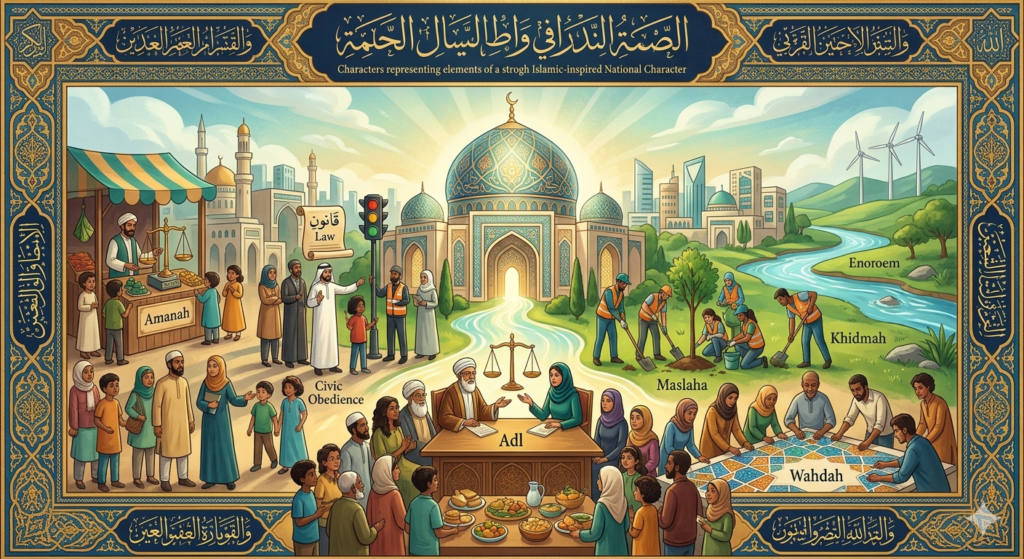
In Islamic theology and jurisprudence, the concept of “National Character” is deeply rooted in the principles of ethical conduct (Akhlaq), social justice (Adl) and the fulfillment of covenants. While the Quran emphasizes a universal brotherhood, it also provides a framework for how individuals should contribute to the integrity and strength of their specific society.
- The Foundation of Trustworthiness (Amanah)
A primary pillar of national character in Islam is Amanah (trustworthiness). This refers to the responsibility citizens and leaders have toward their nation’s resources, laws and reputation.
- The Quranic Mandate: “Indeed, Allah commands you to render trusts to whom they are due…” (Surah An-Nisa 4:58).
- National Application: In a modern context, this implies that being a person of character means fulfilling professional duties, protecting public property, and honoring the “social contract” of the country.
- Civic Obedience and Lawfulness
Islamic perspective emphasizes that a strong national character is built on stability and respect for order. This is often derived from the instruction to respect those in positions of responsibility.
- The Reference: “O you who have believed, obey Allah and obey the Messenger and those in authority among you” (Surah An-Nisa 4:59).
- National Application: This encourages citizens to be law-abiding and to contribute positively to the governance and civic harmony of their nation.
- Justice and Social Equity (Adl)
A nation’s character is defined by how it treats its most vulnerable members. Islam teaches that justice must be absolute and not influenced by personal bias or self-interest.
- The Quranic Mandate: “O you who have believed, be persistently standing firm in justice, witnesses for Allah, even if it be against yourselves or parents and relatives” (Surah An-Nisa 4:135).
- National Application: A citizen of high character stands for the truth and promotes equity, ensuring that the nation’s social fabric is woven with fairness.
- Collective Well-being and Service
The concept of Maslaha (public interest) suggests that the character of a community is reflected in its dedication to the common good.
- The Reference: “And cooperate in righteousness and piety, but do not cooperate in sin and aggression” (Surah Al-Ma’idah 5:2).
- National Application: This serves as a roadmap for civic engagement—volunteering, community service and environmental stewardship are seen as spiritual obligations that build a robust national identity.
- Diversity as a Strength
The Islamic perspective acknowledges that nations and tribes exist not for conflict, but for mutual recognition and the exchange of values.
- The Reference: “O mankind, indeed We have created you from male and female and made you peoples and tribes that you may know one another…” (Surah Al-Hujurat 49:13).
- National Application: This promotes a national character based on pluralism and interfaith harmony. It suggests that a true patriot values the diverse components of their country and seeks to understand and collaborate with all fellow citizens.
Summary Table: Islamic Virtues in National Building
Virtue | Scriptural Concept | Impact on National Character |
Integrity | Sidq (Truthfulness) | Eliminates corruption and builds public trust. |
Patience | Sabr (Perseverance) | Encourages resilience during national crises. |
Moderation | Wasatiyyah | Prevents extremism and promotes balanced progress. |
Covenant | Ahd (Promise) | Ensures loyalty to the nation’s constitution and laws. |